Falling
a Triptych

I started this piece about a year ago, but its meaning deepened during this fire season, as the Kaibab burned and so much was lost. The illustrations are still in progress, yet I wanted to share it while the season’s colors still feel near. I’ve paired it with a few photographs from my Toroweap drives over the years.
This piece began with the word falling—how it holds so many kinds of descent and return. There’s the falling of a child learning the ground, the Fall that altered Eden, the falling of empires, the gentle falling of leaves. Each meaning touches the others. In autumn, we go out to watch the trees let go, almost as if falling itself were a season or a sport we practice—learning how to lose light, to change, to begin again. The poem moves within those crossings, tracing what it means to fall and still rise through the act of becoming.
A triptych is a work presented in three parts, a form borrowed from visual art where three panels are joined to create a single whole. In poetry, the triptych allows distinct moments, voices, or images to stand side by side—each capable of standing alone, yet made more resonant by their relationship to the others. The central section often serves as the heart of the piece, with the outer sections offering contrast or reflection. The result is a layered meditation rather than a linear narrative, inviting the reader to see how meaning shifts across the panels. Given that it’s three poems that speak as one larger piece, it’s a bit longer. Thanks for reading!
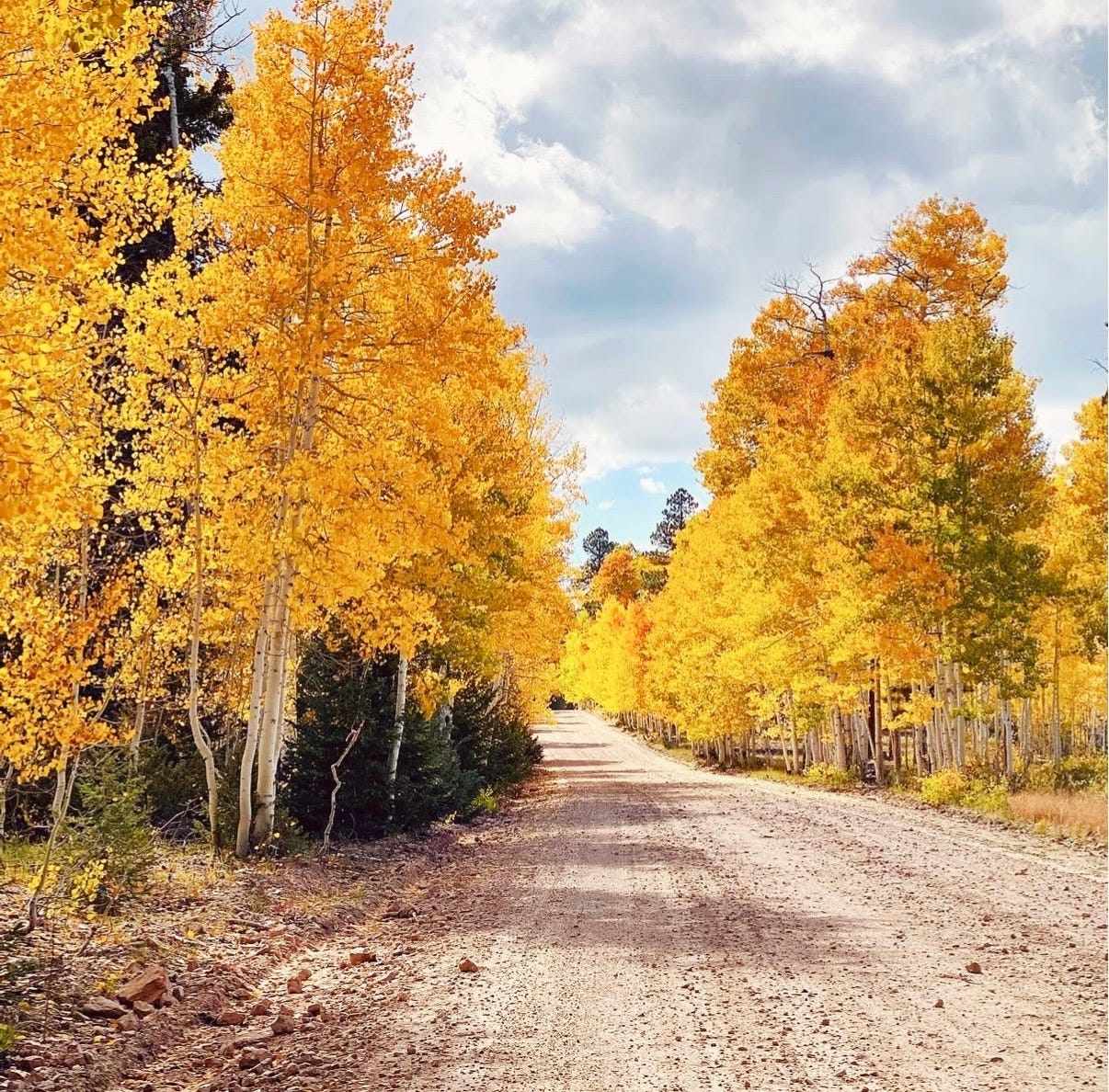
I. Fall
At seven thousand feet, the firs thin
and the aspens start.
White trunks, scarred black
where deer rubbed the bark—
stretch marks, too—
rise in clusters
you can’t walk through.
Each trunk rises
from the same old promise—
a family disguised as a forest.
No one picks their root,
but, we grow—
sometimes deeper than we mean to.
October, the whole range lights.
The kind of color that makes us
stop talking, then say
something small—like “wow.”
The kind of color that happens
when something’s about to end.
Dad says it looks like fire
without the smoke.
At a distance,
even danger shimmers.
Closer, it burns the same.
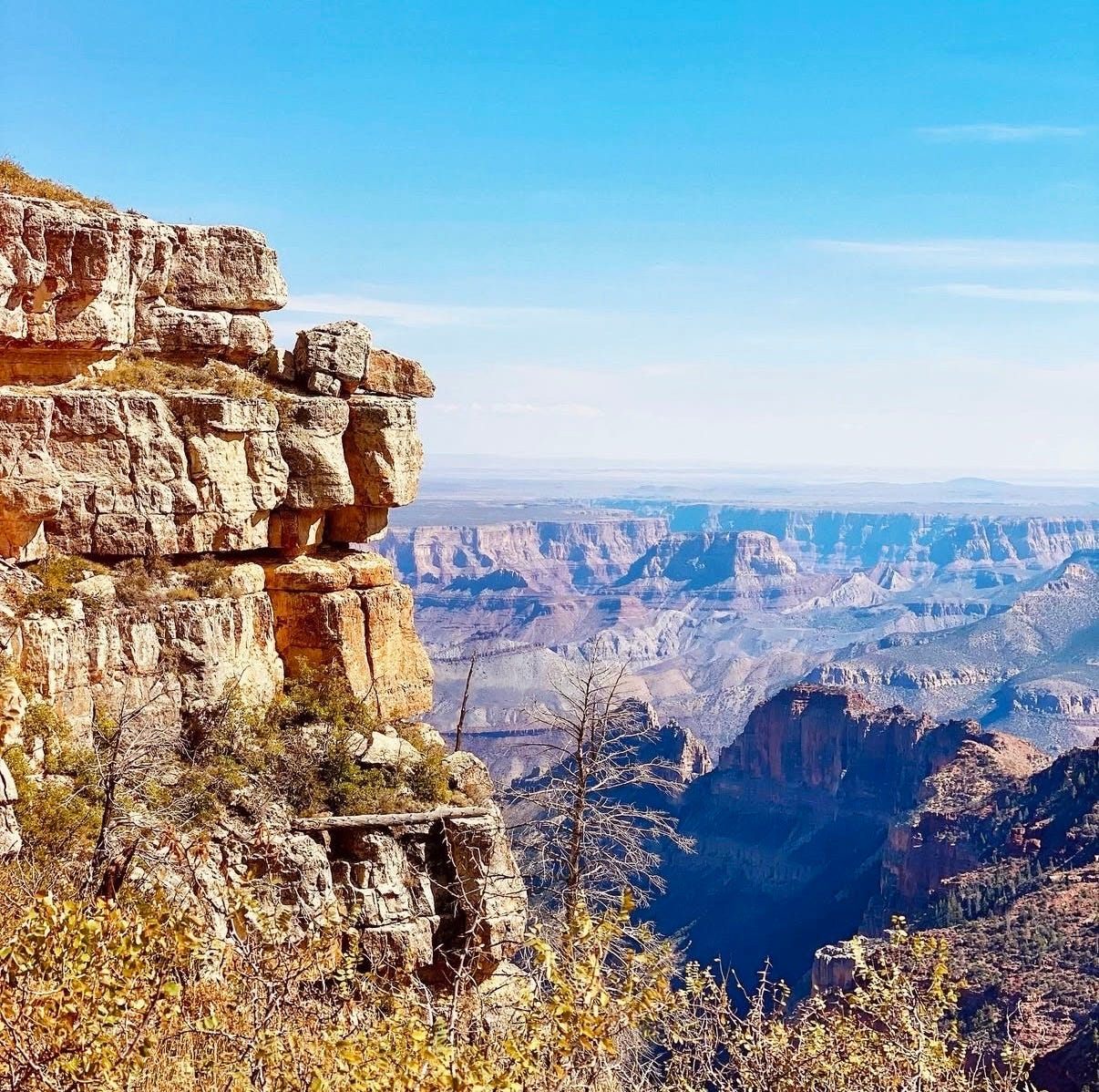
II. Don’t Fall
We turn west
before the visitor center,
ruts veering toward the rim.
Just dust—
the sound of it settling
in the handles of the cooler.
This Sunday,
we are all home.
So we skip church.
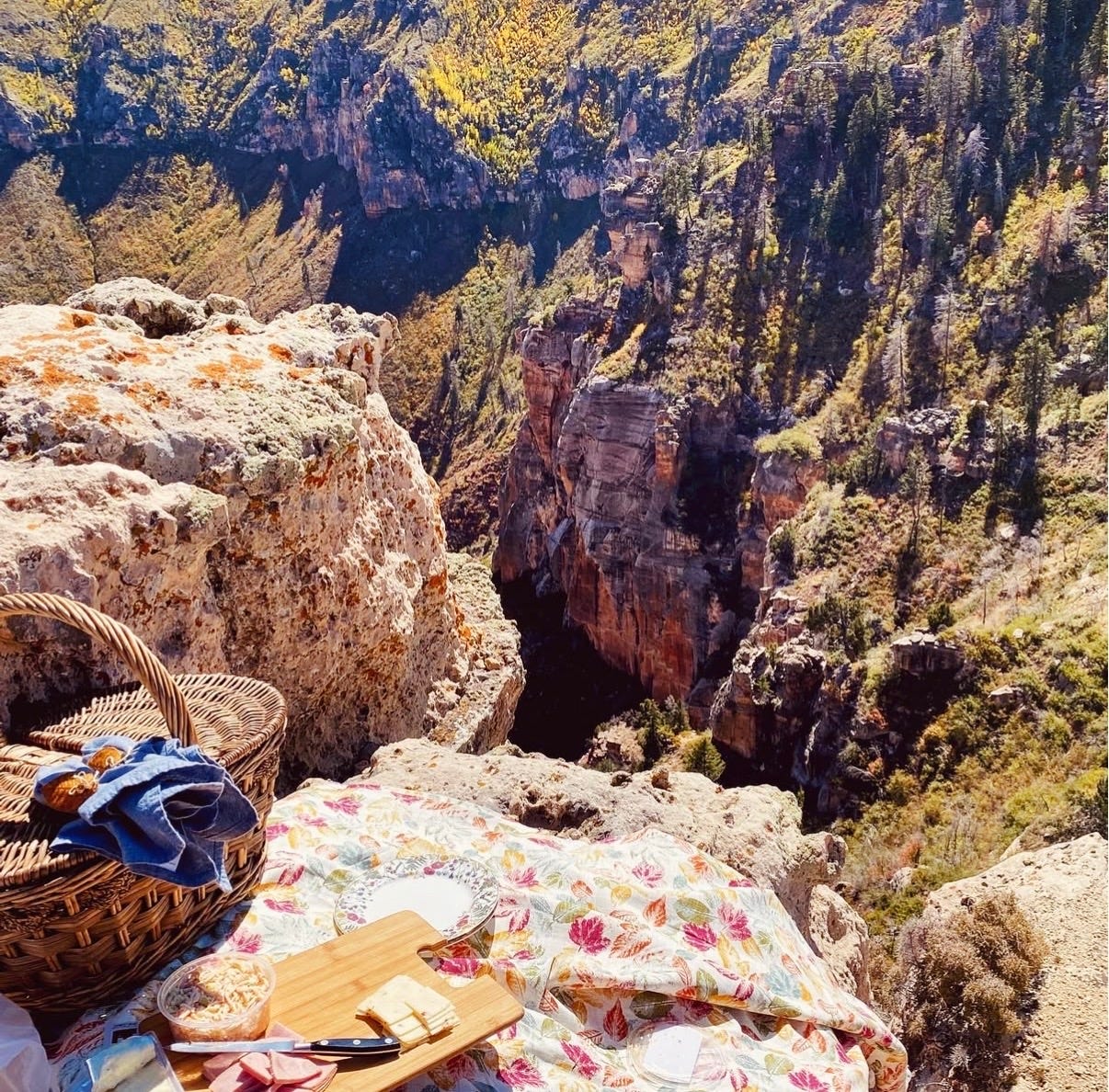
Drop the tailgate.
Fried chicken,
soft from the drive.
Moms’ potato salad,
packed in an old ice cream tub—
the kind they serve at funerals,
but colder, and hers.
The lid cracked like a knuckle.
We sit where we can—
coolers, bumpers,
rocks flat enough to pass.
One mom starts the prayer,
the other chasing napkins.
It’s the closest we get to silence
that feels like agreement.
One of them always says it—
Don’t fall. People die here every year.
We send rocks off the edge
to see what down there speaks.
Falling starts earlier though—
when you stop reaching for a hand.
The roots that keep us
from going over—
we never see them.
Are they even there?
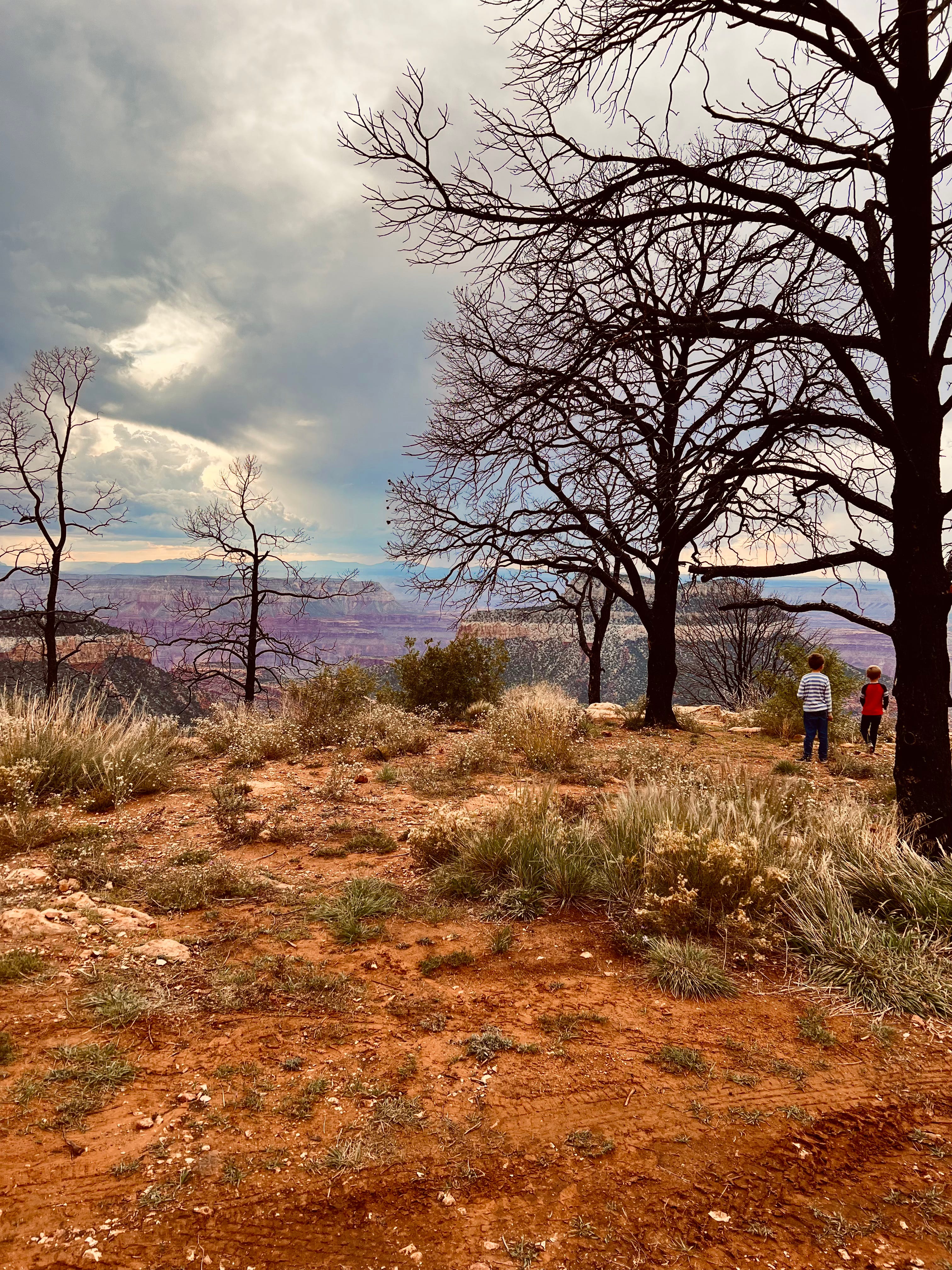
III. Falling
I bring my own now—
kids in the backseat.
Snacks in a cooler.
Someone’s always barefoot.
Always just before we park.
We climb the same road,
ruts cut decades deep.
They shift each season,
but our wheels still find them.
I hate that.
And I don’t.
He pulls toward the edge
like I did—
testing the dust with his toes.
I say it, like I’m supposed to:
Careful. Stay back. Don’t fall.
But we’re already falling.
The aspens flare gold,
then orange, then something like flame—
that warning color
that won’t last.
The mountain loosens,
grain by grain.
Even rocks forget what they are.
Rivers are wrong on the signs.
Roads don’t match the sky.
Still—
we drive the ruts.
Aren’t sure where else to go.
Unpack the cooler,
forget the forks again.
We say what they said to us.
Something holds us.
Doesn’t it?
God, I hope so.
"Time's precious hour comes on fleeting wings..."